Future Tarot Reading
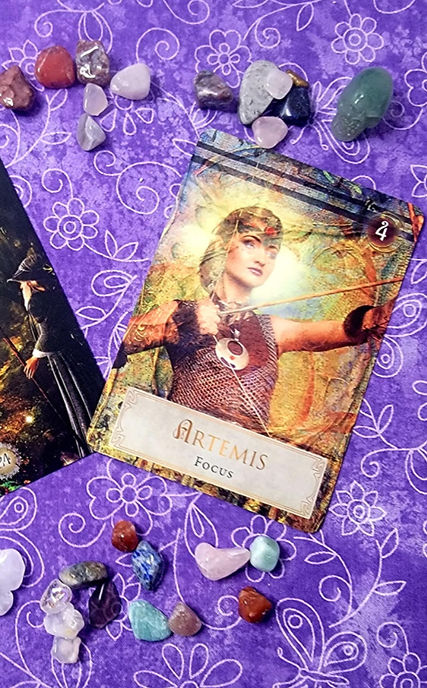
It's natural to wonder what lies ahead, especially during periods of change or uncertainty. Many people use tarot to explore possible future outcomes, not as fixed predictions, but as reflections of the direction a situation may be taking. Understanding this distinction helps create more balanced and meaningful readings. In this guide, you'll learn how future tarot readings are interpreted and how to use them as a tool for guidance rather than certainty.
What the Cards Can Honestly Say About the Future
Most people come to tarot wanting to know what happens next, so it is worth being clear about what the deck actually offers. A reading describes a trajectory, meaning where a situation is heading if the current conditions and behaviour continue unchanged. That is genuinely valuable information and it is not the same as a fixed prophecy. Nothing in the tradition claims the cards fix events, and the older occult writers were careful about this distinction even when their successors were not. A future card is closer to a weather forecast than to a court sentence. It tells you what the current pressure system suggests, and it assumes nothing about whether you carry an umbrella. Read it that way and future questions become useful rather than frightening. The forecast changes what you pack rather than what the sky does.
Trajectory, Not Fate
The most important sentence in any future reading is the one people leave out: if nothing changes. A card in the outcome position of a spread describes the destination of the road you are currently on. Change the road and the outcome changes with it, which is precisely why anybody bothers reading in the first place. If the future were fixed, a reading would be a curiosity rather than a tool. This is also why an unwelcome outcome card should be treated as an early warning rather than a verdict. Ask what would have to be different for that card to become something else, then look at whether you are willing to do it. Some outcomes are genuinely out of your hands and most contain at least one thing that is not. Find that one thing and work on it.
Spreads That Work for Future Questions
Certain layouts handle forward looking questions better than others. A simple three card timeline of past, present and likely direction gives you context and trajectory in one glance. More useful for planning is a four card spread: where things stand, what is building, what would change the direction and where the current path leads. For a specific decision, read one card for each option as a future rather than asking which is better. The Celtic Cross handles complex future questions well because it separates the near future in position six from the eventual outcome in position ten, and comparing those two is often the most informative part. Avoid single card future readings on anything significant, since one card gives you a verdict without context. The more weight a question carries, the more positions it deserves. Match the size of the spread to the size of the decision.

Why Timing Is So Unreliable
Everybody eventually asks when, and this is where tarot performs worst. Various timing systems exist, assigning seasons to suits, weeks to numbers or months to Major Arcana, and none of them agrees with the others. Readers who use them tend to report mixed results at best. The underlying problem is that a deck of images describes conditions rather than calendars, and conditions do not carry dates. If you want to use a timing method, treat it as a rough estimate and record your predictions so you can check your own accuracy. A far better approach is to ask what has to happen before this becomes possible, which gives you a sequence rather than a date. Sequences are readable and calendars generally are not. Be sceptical of any reader who gives you a precise date with confidence.
When a Frightening Card Appears
Sooner or later a future position will produce the Tower, Death, the Ten of Swords or something equally unwelcome, and your stomach will drop. Take a breath before you conclude anything, because these cards are almost never as literal as they look. The Tower describes a sudden clarity that clears ground rather than a catastrophe. Death describes a chapter ending, which is frequently something you have been postponing anyway. The Ten of Swords marks the end of a painful sequence rather than its beginning. Read the picture rather than the reputation, and ask what would be genuinely useful about this if it were true. Then look at what you could change now, since that is the entire point of seeing something early. A warning acted on stops being a prediction.
Free Will and the Point of Asking
There is an old objection to future readings that deserves a straight answer. If you can change the outcome, what use is the prediction, and if you cannot, what use is the warning. The resolution is that a reading changes the reader, which then changes the situation. Seeing a likely outcome clearly is exactly what allows you to interfere with it, and people do so constantly after a difficult reading. That is not a failure of the cards, it is the mechanism working as intended. The most useful future readings are the ones that never come true because you acted on them. Judge a reading by whether it improved your decisions rather than by whether it matched events precisely. Accuracy is a poor measure of usefulness here.
 |  |  |
|---|---|---|
 |  |  |
 |
Asking Repeatedly Will Not Help
Future questions produce more compulsive reading than any other kind, because uncertainty is uncomfortable and shuffling feels like doing something. Asking the same question three times in a week does not produce new information and it reliably erodes your trust in the deck. Set a rule of one reading per question with a minimum gap of a fortnight before revisiting. If you find yourself wanting to redraw, write down the answer you were hoping for, since that sentence usually reveals a decision you have already made. Notice also whether you are reading to inform a choice or to soothe anxiety. The second is understandable and it is not what the cards are for. When a wait is genuinely out of your control, the useful question is what to do in the meantime. That version of the question always has an answer.
Check Yourself Against What Happened
The habit that separates accurate future readers from confident ones is record keeping. Write the date, the question, the cards and your interpretation, then add a line about what actually occurred once you know. After six months, read the file straight through and mark which readings proved accurate. You will discover that certain cards behave reliably for you and that certain kinds of question consistently defeat you. That feedback is the only genuine training available for future work, and almost nobody does it. Be honest in the review rather than generous, since a reading that half matched is not a hit. Over a couple of years this practice will make you considerably better at knowing when to trust your own reading and when to say you are not sure. Knowing your own limits is part of reading well.