Love Tarot Reading
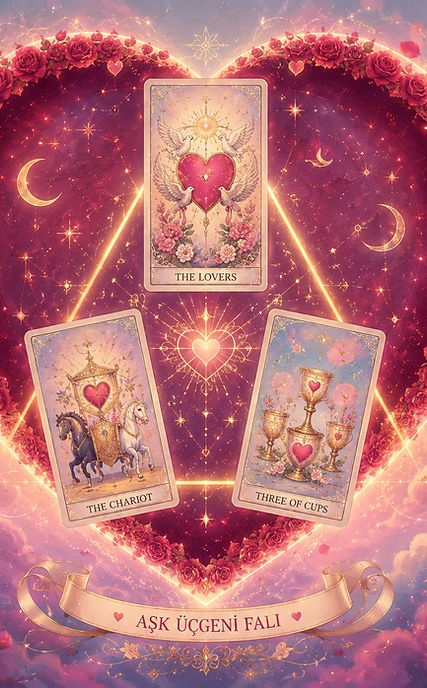
Relationships are among the most common reasons people reach for a tarot deck. Whether you're wondering about a current partnership, a new romance, or your own emotional journey, tarot can encourage deeper reflection and highlight patterns that deserve attention. Rather than offering simple predictions, the cards often reveal the dynamics shaping a relationship. In this guide, you'll learn how love tarot readings work and how to interpret the cards with greater clarity.
What Tarot Can and Cannot Tell You
Love is the most common subject people bring to tarot and it is also where readings go wrong most often. The deck is genuinely useful for examining your own patterns, understanding what you actually want and seeing a relationship dynamic more clearly than you can from inside it. What it does not reliably do is report another person's private thoughts or predict what somebody will do next month. Any reader promising certainty about a third party's feelings is selling you comfort rather than information. Approach a love reading as a way of understanding your side of the connection, which is the only side you can act on anyway. That framing makes readings both more accurate and considerably more useful. It also protects you from spending a year asking the cards about somebody who has not called. That is the most common way love readings go wrong.
Asking Better Questions
The quality of a love reading is decided before you shuffle. Does he love me produces vague readings because it asks for information the cards cannot verify. What is actually happening in this connection produces something you can work with. Other strong questions include what am I not seeing about this relationship, what pattern do I keep repeating, what do I actually need from a partner, and what would help this situation most right now. Notice that all of these point at you rather than at somebody else. Avoid questions with a hidden demand inside them, such as when will they realise they were wrong, since those are statements wearing a question mark. Write your question down before shuffling and read it back once. If it contains an assumption, rewrite it.
Reading for a Relationship You Are In
When you are already with somebody, the most useful spread is three cards: you, them and the connection between you. Read your own card honestly and without flattery, since your card is the one you can do something about. The middle card describes the relationship itself as a third thing that both of you affect and neither of you fully controls. Look for whether the two personal cards face each other or away, and whether they belong to compatible suits. Two Swords cards suggest a relationship living largely in conversation and argument, while two Cups suggests feeling with possibly not enough practical structure. Read the connection card last and ask what it needs rather than what it is. Then choose one thing you will do differently this week. A reading about a relationship should change something in it.

Reading When You Are Single
Tarot is arguably more useful when you are not in a relationship, because it can examine what you are actually looking for. Draw one card for what you genuinely want, one for what you keep choosing and one for the gap between them, since that gap explains most repeated disappointments. Another strong layout asks what is ready in me, what is not ready yet and what would help. Resist the urge to ask when will I meet somebody, as timing questions produce anxiety and very little else. Better to ask what would make me more available to a good relationship. Look particularly at Pentacles and Swords cards in these readings, since practical circumstances and mental habits shape romantic life far more than people expect. Romance is rarely the actual obstacle. Deal with those two areas and the rest tends to loosen by itself.
The Ethics of Reading About Somebody Else
There is a real boundary here and it is worth respecting. Reading about another person's feelings, intentions or private life without their knowledge is both unreliable and a poor way to treat somebody. That includes asking whether an ex is thinking about you, what somebody's new partner is like or whether a friend is being honest. Turn those questions around and they become legitimate: what is my part in this, what am I hoping for and why, what would I do if the answer were no. Reading for a friend about their own relationship is fine when they have asked for it. Reading about a third party they are curious about is where it becomes surveillance. Keep the reading on the person in front of you. That single rule keeps this practice honest.
Difficult Cards in a Love Reading
Certain cards cause disproportionate panic in romantic readings and they are usually misread. The Tower does not mean your relationship will explode, it means something will be seen clearly that has been avoided. Death describes a phase ending, which in a long relationship is normal and frequently healthy. The Three of Swords is painful and does not automatically mean betrayal, since honest conversations often arrive under this card. The Devil is not a verdict about somebody's character, it describes attachment, habit and the things you find difficult to leave. Read the picture rather than the reputation. If a card frightens you, ask what it would mean if it were describing something already true rather than something coming. That reframing removes most of the fear.
 |  |  |
|---|---|---|
 |  |  |
 |
Compatibility and Timing Questions
Two popular kinds of love question need careful handling. Compatibility readings work best when framed as what each person brings and where the friction lives, rather than as a verdict on whether it will work. Nobody's compatibility is fixed, and a spread describing significant friction is telling you where the work is rather than issuing a refusal. Timing questions are less reliable, since tarot is much better at describing conditions than dates. If you must ask about timing, ask what needs to happen before this is possible rather than when it will occur. That version produces something actionable. Treat any specific date a reader gives you with healthy scepticism. Conditions are readable and calendars generally are not.
What to Do With the Reading
A love reading that ends in a feeling has not finished its job. Before you put the cards away, write down what the spread actually said in two plain sentences. Then name one concrete thing you will do differently, whether that is a conversation, a boundary, a message you send or one you do not. Emotional readings in particular tend to evaporate within a day if nothing is written down. Give the reading at least a fortnight before revisiting the same question, since asking weekly keeps you in the reading rather than in your life. If you notice you are reading about the same person constantly, that pattern is itself the message. At that point the most useful thing you can do is put the deck away and pick up the phone. Some questions are answered by asking the person.